[Télécharger] Pulmonary Hypertension in Adult Congenital Heart Disease (Congenital Heart Disease in Adolescents and Adults) (English Edition) de Konstantinos Dimopoulos,Gerhard-Paul Diller Livres Pdf Epub
Télécharger Pulmonary Hypertension in Adult Congenital Heart Disease (Congenital Heart Disease in Adolescents and Adults) (English Edition) de Konstantinos Dimopoulos,Gerhard-Paul Diller Livre PDF Gratuit
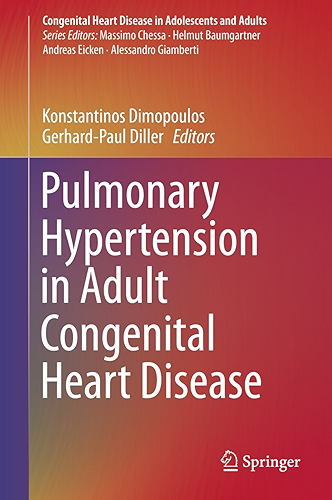
Télécharger "Pulmonary Hypertension in Adult Congenital Heart Disease (Congenital Heart Disease in Adolescents and Adults) (English Edition)" de Konstantinos Dimopoulos,Gerhard-Paul Diller Pdf Epub
Auteur : Konstantinos Dimopoulos,Gerhard-Paul Diller
Catégorie : Boutique Kindle,Ebooks Kindle,Ebooks en langues étrangères
Broché : * pages
Éditeur : *
Langue : Français, Anglais
This book is intended as a comprehensive, practically oriented reference on pulmonary hypertension within the context of adult congenital heart disease (ACHD). After an introductory chapter on pathophysiology, the various types of pulmonary hypertension that may be encountered in ACHD are discussed, highlighting the specifics observed within different patient categories. The diagnostic approach is then addressed in detail, and the last section of the book is devoted to management options, from conservative approaches to interventional treatment and the concept of treat and repair. Management in specific patient subjects, such as pregnant women, Fontan patients, and Down syndrome patients with Eisenmenger syndrome, is fully discussed, and guidance is also provided on palliative care. Pulmonary arterial hypertension related to congenital heart disease (PAH-CHD), despite significant similarities in lung pathohysiology, differs significantly from other types of PAH in terms of mechanism of onset, natural history and management. Mistakes and pitfalls in the management of patients with PAH-CHD are often related to a lack of knowledge or expertise in this condition. Pulmonary Hypertension in Adult Congenital Heart Disease will be a valuable resource and learning tool for all who care for patients with ACHD, both in tertiary practice and general cardiology.
Télécharger Pulmonary Hypertension in Adult Congenital Heart Disease (Congenital Heart Disease in Adolescents and Adults) (English Edition) de Konstantinos Dimopoulos,Gerhard-Paul Diller Pdf Ebook
Pulmonary arterial hypertension in adult congenital heart ~ Pulmonary arterial hypertension (PAH) is commonly associated with congenital heart disease (CHD) and relates to type of the underlying cardiac defects and repair history. Large systemic to pulmonary shunts may develop PAH if untreated or repaired late. PAH, when present, markedly increases morbidity and mortality in patients with CHD.
Pulmonary hypertension related to congenital heart disease ~ Pulmonary arterial hypertension related to congenital heart disease (PAH-CHD) is a common type of pulmonary arterial hypertension (PAH). Despite this, little emphasis has been given to this group of patients until recently, when compared with idiopathic PAH. This is largely because of the complexity and the wide range of underlying cardiac anatomy and physiology, with a multitude of adaptive .
Pulmonary Hypertension in Adult Congenital Heart Disease ~ Pulmonary arterial hypertension related to congenital heart disease (PAH-CHD), despite significant similarities in lung pathohysiology, differs significantly from other types of PAH in terms of mechanism of onset, natural history and management. Mistakes and pitfalls in the management of patients with PAH-CHD are often related to a lack of knowledge or expertise in this condition.
(PDF) Pulmonary hypertension in congenital heart disease ~ Pulmonary hypertension is defined as a mean pulmonary arterial pressure ≥25 mmHg. We focus on its relevance in congenital heart disease, reviewing pathophysiology, diagnosis and management.
Pulmonary hypertension in adults with congenital heart ~ Congenital anomalies of the heart and great arteries (congenital heart disease [CHD]) are among the most common congenital anomalies. Every year, approximately 1.5 million children worldwide and about 6500 children in Germany are born with CHD [, , ].As a result of improved medical care, about 90% of them reach adulthood [4,5].It is assumed that in Germany currently up to 300,000 adults with .
Pulmonary arterial hypertension in congenital heart ~ Medical and scientific research in the field of pulmonary arterial hypertension (PAH) in adults with congenital heart disease (ACHD) has gradually become globalized, inclusive and collaborative over the past few years. The education of physicians, health administrators and patients on congenital heart disease (CHD), specifically in the field of PAH, is of paramount importance. It is also .
The spectrum of pulmonary arterial hypertension in adults ~ Congenital heart disease (CHD) is one of the most common causes of pulmonary arterial hypertension (PAH), with a prevalence nearing that of idiopathic PAH in registries. Despite similarities in pulmonary vascular pathology, PAH-CHD differs from idiopathic PAH and other types of PAH. In fact, PAH-CHD is a term that includes a wide spectrum of conditions and pathophysiologies, ranging from .
Pulmonary arterial hypertension associated with congenital ~ Pulmonary arterial hypertension (PAH) is a common complication of congenital heart disease (CHD), with most cases occurring in patients with congenital cardiac shunts. In patients with an uncorrected left-to-right shunt, increased pulmonary pressure leads to vascular remodelling and dysfunction, resulting in a progressive rise in pulmonary vascular resistance and increased pressures in the .
Pulmonary Hypertension in Congenital Heart Disease ~ The majority of PH in congenital heart disease (CHD) comes under the umbrella of pulmonary arterial hypertension (PAH, Group 1 in the WHO Classification) when it is referred to as PAH associated with CHD (APAH-CHD) (Table 25.1).Being ‘pre-capillary’ PH, the pulmonary wedge pressure is ≤15 mmHg with pulmonary vascular resistance >3 Wood units, and the cardiac output is normal or reduced .
Pulmonary hypertension in children with congenital heart ~ Pulmonary arterial hypertension associated with congenital heart disease (PAH-CHD) is a complex disease that presents with a broad spectrum of morphological and haemodynamic findings of varying severity. Recently, the aspect of paediatric pulmonary hypertensive vascular disease (PPHVD) has been introduced to expand the understanding of the full spectrum of pulmonary hypertension and increased .
Pulmonary Hypertension in Congenital Heart Disease ~ Pulmonary Hypertension in Congenital Heart Disease Wayne J. Franklin, MD FACC Director, Texas Adult Congenital Heart Center Associate Professor of Pediatrics and Medicine . xxx00.#####.ppt 6/9/2017 1:34:39 PM Overview •Adult Congenital Heart Disease in the U.S. •Pulmonary Arterial Hypertension (PAH) Review •PAH and Congenital Heart Disease trials –BREATHE-5 –SERAPHIN •ACHD cases .
Congenital heart disease and pulmonary arterial ~ Adult congenital heart disease and pulmonary hypertension. Congenital heart disease (CHD) is an important group of cardiovascular disorders affecting pediatric and adult populations worldwide. Despite the global tendency toward early diagnosis and treatment of anomalies such as atrial septal defect (ASD), aortic coarctation, Ebstein’s anomaly .
Pulmonary Hypertension in Congenital Heart Disease ~ New insights into pulmonary vascular biology, improved understanding of genetic predisposition, the development of therapies that engage novel pathways, and the improved delivery of medical and surgical care in underprivileged areas will, we hope, substantially reduce the medical burden caused by pulmonary vascular disease associated with congenital heart disease.
Pulmonary Hypertension in Congenital Heart Disease ~ Elevated pulmonary artery pressure in congenital heart disease is caused by pulmonary overcirculation, pulmonary vasoconstriction, and pulmonary vascular disease, either alone or in combination. One of the most common defects associated with elevated pulmonary pressure is a large ventricular septal defect (VSD). In an infant, although the pulmonary pressure is at systemic levels, the pulmonary .
An Approach to Pulmonary Arterial Hypertension in the ~ Pulmonary arterial hypertension in adult patients with congenital heart disease is a heterogeneous condition caused by pulmonary vascular disease, pulmonary vasoconstriction or by overcirculation. These pathophysiologies may occur in isolation or in combination. The most common form is seen in patients with unrepaired large shunts. The initial, innocent, high flow hyperkinetic PAH gradually .
Congenital Heart Disease - Pulmonary Hypertension Association ~ Congenital heart defects affect slightly less than 1 percent of the population. Because of the development of successful operative repairs and catheter-based corrections performed at an early age, the number of adults with congenital heart disease (CHD) has gradually increased. There are now estimated to be more than a million adults with CHD in the United States and, for the first time in .
PULMONARY HYPERTENSION IN CONGENITAL HEART DISEASE ~ SHEPHARD RJ. Pulmonary arterial pressure in acyanotic congenital heart disease. Br Heart J. 1954 Oct; 16 (4):361–374. [PMC free article] SHORT DS. The arterial bed of the lung in pulmonary hypertension. Lancet. 1957 Jul 6; 273 (6984):12–15. SWAN HJ, ZAPATA-DIAZ J, BURCHELL HB, WOOD EH. Pulmonary hypertension in congenital heart disease.
Pulmonary Hypertension and CHD / American Heart Association ~ However, congenital heart disease can cause PH that's similar to PH when the cause isn't known, i.e., idiopathic or unexplained pulmonary arterial hypertension. In this case, the PAH is considered pulmonary arterial hypertension associated with congenital heart disease, such as associated with a VSD or ASD (either repaired or unrepaired). The problem is due to scarring in the small arteries in .
Pulmonary hypertension related to congenital heart disease ~ Pulmonary arterial hypertension (PAH) is a serious complication of congenital heart disease, causing an increase in morbidity and mortality. The progressive and irreversible pulmonary vascular .
Congenital Heart Disease and Pulmonary Hypertension ~ Congenital Heart Disease and Pulmonary Hypertension Vedant Gupta, MDa,b, Adriano R. Tonelli, MDc, Richard A. Krasuski, MDd,* INTRODUCTION In 1897, Victor Eisenmenger described a patient with dyspnea since infancy who died of massive hemoptysis and was found on autopsy to have a large ventricular septal defect associated with abnormal pulmonary vasculature. This finding was not further .
[Pulmonary arterial hypertension in adult patients with ~ Pulmonary Hypertension (PH) is definited by a mean pulmonary artery pressure (PAPm) >25 mmHg at rest. The Dana Point 2008 Revised Classification System represents the most recent classification system update with respect of various etiologies of PH. About 10 % of adolescents or adults with uncorrected congenital heart disease (CHD) with left-to-right shunt and high pulmonary blood flow develop .
Pulmonary Arterial Hypertension in Adults with Congenital ~ Congenital heart disease is the most common congenital malformation and accounts for about eight cases per 1,000 births. 1 Due to tremendous developments in cardiac surgery, nearly 90% of all children with congenital heart disease reach adult age. In patients with congenital heart disease, pulmonary arterial hypertension (PAH) may develop due to increased pulmonary arterial flow as a result of .
Pulmonary Hypertension in Adult Congenital Heart Disease ~ This book is intended as a comprehensive, practically oriented reference on pulmonary hypertension within the context of adult congenital heart disease (ACHD). After an introductory chapter on pathophysiology, the various types of pulmonary hypertensi
Pulmonary Hypertension - ACHA ~ Pulmonary Hypertension If you have pulmonary hypertension (PH), it means that the blood pressure in your lungs is higher than normal. Up to 10% of adults with congenital heart disease (CHD) could have PH. The heart has two sides that send blood to two places—the lungs and the body. When your caregiver uses a blood pressure cuff on your arm, s/he is measuring the pressure of arterial blood in .
Comments
Post a Comment